
Residential Storage
Plan Backup Around Your Home
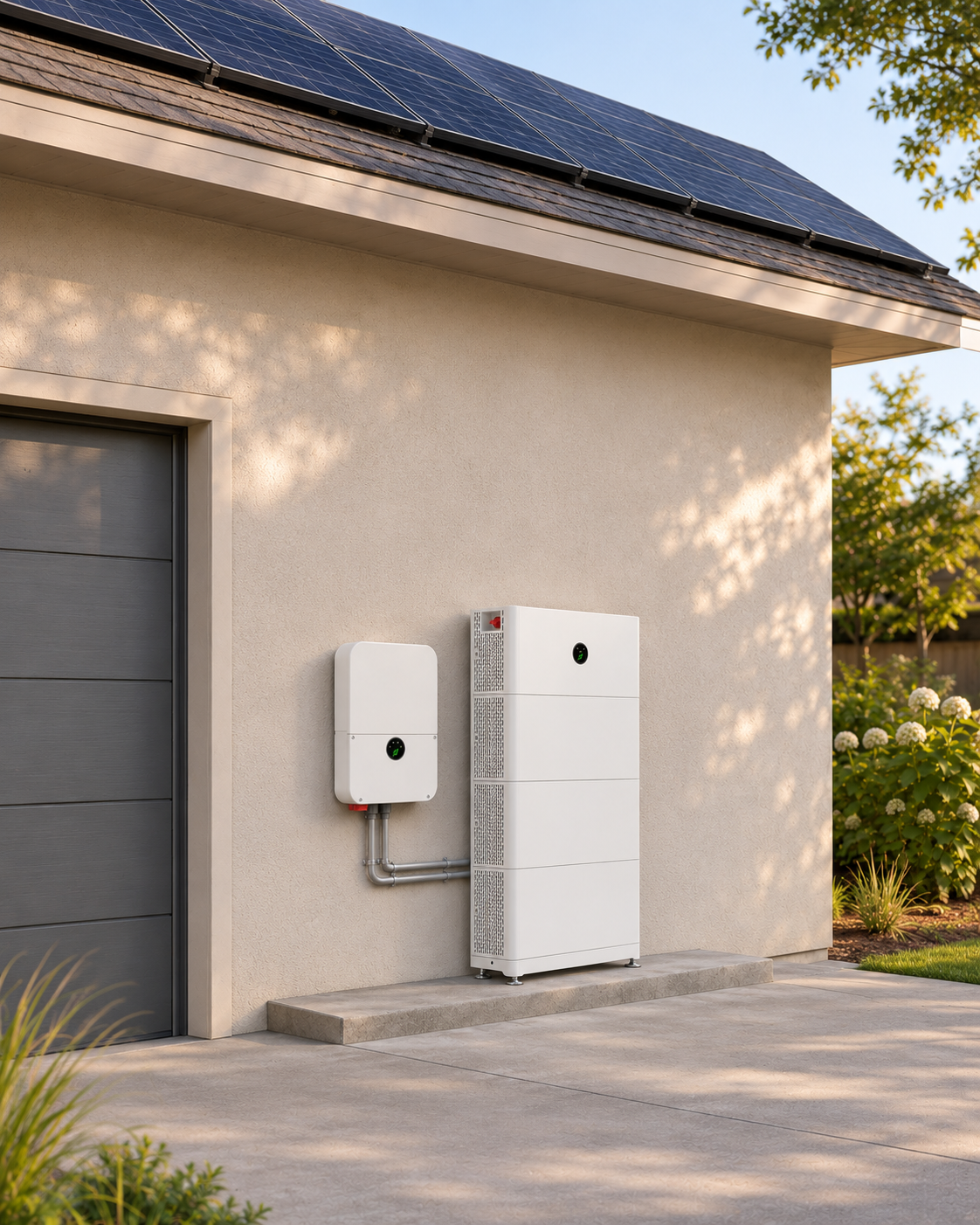
Explore residential battery storage around the loads you want to support, available space, and any existing solar equipment.
Choose What Matters Most
Backup Priorities
Identify the circuits and appliances that matter most during an outage.
Solar Integration
Review compatibility with any existing or planned solar equipment.
Everyday Energy Use
Consider household routines and applicable electricity rates.
How the System Fits Together
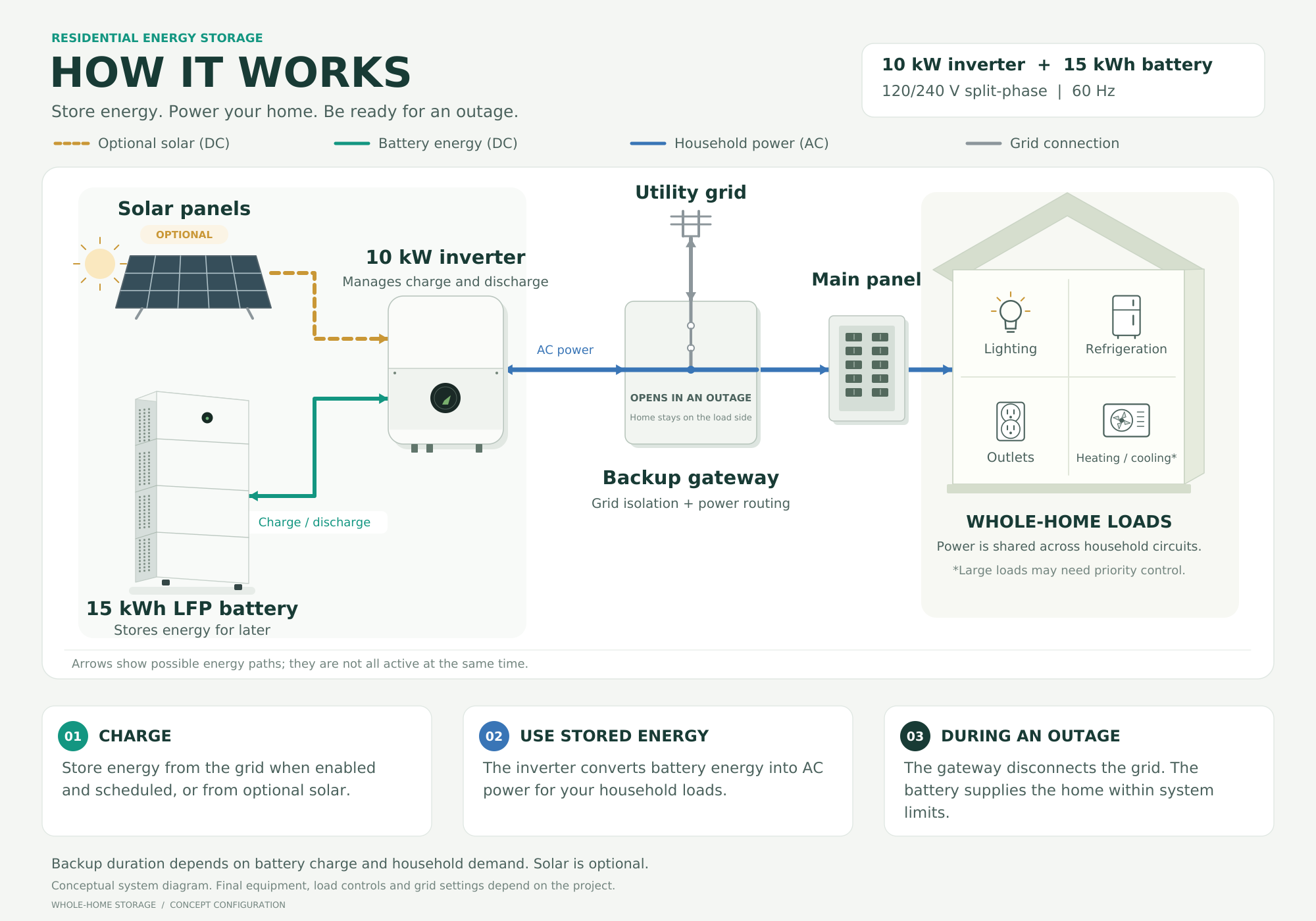
A residential system combines energy storage, power conversion, and the controls needed for its intended application.
Battery Storage
Stores energy for later use.
Power Conversion
Converts electricity for the selected system layout.
Backup Controls
Provide the isolation and control required for supported backup operation.
Components and requirements vary by configuration and installation.
Compare System Layouts
Modular System
Separate components are selected as an approved combination around the project's power and energy requirements.
All-in-One System
An integrated layout combines battery storage and power conversion in a single product or coordinated enclosure.
Home Backup and Grid Participation
Some utility programs coordinate home batteries for grid services. Participation, ownership, and backup reserves depend on the specific program.

Residential System
Standard Residential System
A reference configuration combining an inverter and modular battery storage. Final sizing follows the home's loads, site conditions, and selected equipment.
Reference Configuration
20 kW
Inverter rating
30 kWh
Battery energy
Power & Capacity
System Features
Reference configuration shown. Capacity options and specifications depend on selected equipment and approved configurations.
Safety Certifications
The system is certified to UL 9540, with battery and inverter certifications to UL 1973 and UL 1741.
Common Questions
Discuss Your Home Storage Needs
Share your location, backup priorities, and any existing solar details to start the conversation.